Author: Vincent Weberink

  • How to seed a Growth Team. A cocktail of skills, experience and competencies.

    How to seed a Growth Team. A cocktail of skills, experience and competencies.

    In business, growth is everything.

    As the saying goes, unless you’re growing, you’re dying. Growth hacking is a powerful methodology that empowers entrepreneurs to uncover what channels and strategies fuel rapid business growth. 


    To grow and climb a giant beanstalk, plant the seed.

     The principles that underlie Growth Hacking are inherent to the tech industry. Growth hacking isn’t not a new take on digital marketing; It’s an all-inclusive, purpose-build methodology that helps you engineer a self-perpetuating development and marketing machine to scale your business.


    Growth hacking aims to help you uncover the ‘hack’ that will accelerate business growth. Product development should be an inherent part of the growth hacking strategy. You must build what your users want, not what you think they want.


    I got my climbing gear, what do we do now?

    The best way to build your customer-base is to get them involved from the outset so you can learn and understand what customers want in a product or service like yours. Then switch focus to the continuous optimisation of the product through short development cycles and testing in the real world.  


    More than likely, you will undergo many creative product iterations until you discover the mechanisms that gain your traction: your growth hack. Without input from your early adopters, you will struggle to establish a presence in any market.


    “Growth hacking is developing and utilising a continuously evolving mindset to approach the challenges that entrepreneurs face when building and scaling their business.”


    For most startups, the growth hacking journey inevitably begins with testing marketing channels and applying quick wins that allow you to engineer traction, including hustling. The objective is to build a strategy that is based on a tested and proven understanding of your potential clients.


    Data changes everything

    In sports, the concept of a ‘Moneyball’ has transformed underperforming teams into champions without huge injections of capital. In baseball, the Boston Red Sox won the World Series and Liverpool Football Club are competing at the top of the Premier League How? Both studying the data behind every game.


    The principle is based on using data to find out what is undervalued, what tactics perform best and to out-think rather than outspend the competition. The same is true of growth hacking. 


    2 sandwiches, 1 orange, a bottle of milk and a 5K beanstalk climb.

    For the most part, startups and product teams have limited resources; They have to be creative to acquire new users and retain them and grow.


    Traditional marketing channels are expensive and, for the most part, saturated. The need for growth hacking is evident; harness unconventional channels that require testing, experimenting, and creativity to engineer a competitive edge. 


    Most projects focus heavily on product, but today’s real challenge is distribution;. 

     targeting the right people, at the right time as economically and efficiently as possible.


    ROI is more important than brand awareness = Finding out “what works”! An entrepreneur’s first goal should be to become profitable. Once you are profitable you can then focus on brand awareness. 


    Felled a beanstalk before?

    Growth hacking principles:

    1. If you build something, will they come? Unlikely. You don’t acquire customers by chance, even if you have a great product  Only through testing can we determine whether something is likely to be a success, and only then with caveats. However, data helps fell the beanstalk, period. 
    2. There is no gray area. Scale successes and kill failures. 
    3. Test as much and as fast as possible. Speed usually wins.


    Growth hacking is 70% best practices and 30% subversiveness – there is little evil in every success (you can’t do it all by the book break the rules to make new ground). 


    Growth Hackers VS  Digital Marketers VS Data Analysts

    Growth hacking teams rely on rapid experimentation while marketing teams traditionally make use of top-down planning. A growth hacking team works beyond the boundaries set in a traditional organization. The biggest difference is that marketing teams are focused on the top of the funnel, where they measure impressions, leads, etc. On the other hand, a growth hacking team is overlapped with product engineering and design. They comprise various different skill sets and raise ideas and experiments that go beyond traditional silos and boundaries. Furthermore, a growth team focuses on the entire funnel.  


    The core components of growth are:

    • The creation of a cross-functional team that breaks down the traditional silos of marketing and product development,
    • The use of qualitative research and quantitative data to gain deep insights into customer behaviour,
    • The rapid generation and testing of ideas backed up by rigorous data analysis to take action on the results.


    Sales/Product funnel:

    Step 1: Awareness – Get people to know your brand

    Step 2: Acquisition – Getting people to visit your channel

    Step 3: Activation – Ensuring users have a great  experience

    Step 4: Retention – Making sure users come back

    Step 5: Revenue –  Turning users into customers 

    Step 6: Referral –  Customers invite their friends


    Growth Hacking applies to the entire product funnel, whereas digital marketing traditionally only applies to steps 1 and 2. The other differentiator is that the growth hacker also has a strong technical skill set. 


    Growth hackers function at the intersection of marketing and product development. They work with engineering, design, analytics, product management, operations, and marketing to design and execute growth initiatives. 


    Smart*ss Giants?!@ Beware, they are smarter than they look.

    Growth hacker knowledge


    What do we expect a growth hacker to know; what is the width and depth of their knowledge? 

    Growth hacking skills aren’t acquired overnight. You need experience across many different areas before you are a true growth hacker. Growth hacking is not a trick, to be good, you need experience and instinct. Growth hacking typically covers:


    • Statistics – Conversion Rate Optimization; Virality; PR; 
    • Programming – A/B Testing; SEO; SEM; Online Ads;
    • Product Design & UX Principles – Photoshop & Wireframing; Tools; Marketing; Biz Dev; Email Marketing;
    • Analytics – Funnel Marketing; Content Marketing; Direct Sales; Affiliate Programs; 
    • Behavioural Psychology – Copywriting; Events; Conferences; 
    • Brand Positioning & Storytelling – Database Querying; Platforms; Re-Targeting; Artificial Virality. 


    Fact: Growth hackers who possess all of these skills are almost impossible to be found, which is why they are called “Unicorns that live on clouds”.


    Most growth hackers have broad knowledge across all of these subjects but are specialized in two or three areas; that’s why growth hacking teams are the best option for entrepreneurs. Growth hacking teams represent the future of innovation and problem solving because they stand at the intersection of marketing and product development. 


    Teaming up with a Growth Team

    Growth hacker teams are small in size and generally comprise a designer, developer and marketer;  small data-driven and technical team aimed at scaling a company. They have helped pioneer a new era of data and product-driven growth. They perform at the intersection of product, data, and marketing. 


    Growth hacking is the future; reflected in the inflated demand for growth hackers. Yet, there is still a shortage of growth hackers, and that is why the opportunity needs capturing. 


    We are in an era of data-driven marketing; you need a good team that is qualified and organised to keep up with the pace of technology.  Increasingly sophisticated artificial intelligence makes it both easier and harder to implement the right strategy because of the increasing demands of the market and the density of products/services available. This is the main reason why every company needs a high performing growth team; acquiring users is the primary goal and is the biggest obstacle that entrepreneurs face today. Without users, you have no data, no traction and no money. 


    There are two types of growth hacking teams:

    • Product-Led (Functional)
    • Independent-Led


    In the first model, the team reports to a product management executive. This type of Model tends to be utilized by companies with established organizational structures. If you are adopting this model you should have three growth teams:

    • One for Signups
    • One for Onboarding
    • One for Notifications 


    In the Independent-led Model, the team is centralised and reports to the VP of Growth or equivalent. This is the ideal structure because it gives more autonomy to the team, and a growth team needs freedom to experiment and manoeuvre. However, this type of Model is harder to implement if it’s not done early in the company’s conception. 


    In an Independent-Led Model, it is highly recommended that you have a growth team for each phase of the funnel: 

    • One team on Awareness
    • One team on Acquisition
    • One team on Activation
    • One team on Retention
    • One team on Revenue
    • One team on Referral


    Furthermore, you should consider the following factors when creating your growth team

    • Channels – What channels are effective for growth?
    • Focus – Is your company design-focused, product focussed, marketing-focused, or growth focused?
    • Personality – Find similar-minded people for your team


    A team  to slay the giant:

    Head of Growth – the analytics risk taker, the hustler. The M-shaped marketer;

    Coder (Developer) – full stack coder who is not scared to build stuff that is going to break;

    UX/UI Designer – fast, with customer empathy;

    Data Analyst – Sees stuff others don’t, what is broken and what works.


    The Head of Growth: (M-shaped Marketer)

    • Process-driven,
    • Analytical Approach,
    • Creative risk taker,
    • M-shaped,
    • Strong Personality.

    The Head of Growth sets the OKRs (Objective and Key Results), the experimentation tempo and area of focus. They are in charge of weekly growth meetings and monitor the performance of the teams. The Head of Growth is the leader with responsibility for KPIs and metrics defined by the company. 

    Basic skill set:

    • Fluency in data analysis,
    • Expertise or fluency in product management (developing and launching a product),
    • Understanding of how to design and run experiments,
    • Familiarity with the methods for growing adoption and use of the type of product/service that the team is working on,
    • Good leadership and management skills.


    The Developer – Full-stack:

    • Fast iterations,
    • Builds stuff that breaks,
    • Loves data + tracking,
    • Creative,
    • Executes super fast.

    A lot of growth teams hires a developer when their skills are needed, but this is a mistake. The best engineers provide insights and come up with highly creative ideas, mostly in regards to technical implementations and capabilities. A growth engineer has a specific mindset; most engineers won’t be thrilled with the prospect that they are going to write a lot of code that will be discarded, and that is essential when doing growth experiments.   

    A developer performs coding for product features, websites, applications and experiments for the growth team. Having a sound growth engineer on your team is a competitive advantage. 


    The UX/UI Designer: 

    UX/UI Designers have knowledge of behavioral psychology and customer empathy. They are Front-end artist:

    • Executes fast,
    • Customer empathy,
    • Design and copywriting,
    • Front-end code,
    • Concept first, polish later.

    Designers are user-focused so they bring important insights on user behaviour and create customer journey maps, thus designing the actual experience to be tested. They provide valuable insights in psychology and usability research. 


    The Data Analyst: 

    A data analyst It is someone who truly understands data and who is able to find insight from data; a data magician!

    • Small data sets,
    • Large data sets,
    • Back-end knowledge,
    • Needle in the haystack,
    • Data to insights.

    A data analyst provides valuable insights and analysis of data for the team. A data analyst needs to:

    • Understand experiment design, 
    • Statistics, 
    • How to connect and draw insight from different business sources,
    • How to ask great business questions and discover answers with data analytics. 

    It is always recommended that everyone from the team should have a solid knowledge about analytics, however, having a specialist is of crucial importance.


    Fee-fi-fo-fum, what Makes a Great Growth Hacking Team?!

    So what separates the ordinary from the brilliant? Just because you hire the four key team members doesn’t mean that you will end up with a crack team that will grow your product/service. 


    A great growth team must be brilliant in the following areas:

    • Process – Having a team that knows various prioritizing models and how to switch easily transition from one to another is crucial. 
    • Experimentation Output – The essence of growth hacking is to constantly experiment, because the more you do, the more you learn and improve. It is a fact that around 80 % of the experiments will be failures, but if you have a high experimentation output, that is not a problem, and the knowledge that is gained from the experiments is valuable. 
    • Experiment Design – Designing the separate variants to create an informative outcome no matter whether the experiment is a win or a fail. You have to be thoughtful of your variants, and make V2 different from CONTROL and V1. This will enable you to extrapolate your learnings.  
    • The Ideation of First Principles – You should always focus on root ideas with first principles thinking. Always ask yourself: “Why should this work?” but don’t be technical in the answer, do it in a real life parallel through experiments. 
    • A Growth Mindset – A great growth hacking team is always testing, learning new tactics and improving, and it is driven by the inner goal towards maximizing the quality of the user experience rather than towards having a lot of users. Once this is done, the users come on their own.  
    • Goal-based prioritization – A high performing growth team prioritizes the level of impact against the level of effort. This is usually done in planning sessions.  


    You can customize this how you want, but the general idea is that it’s a cross-functional team.

     with these two qualities:

    • Comprised of high performing people.
    • Incorporate incredibly rigorous growth and experimentation processes.


    Like with all good magic beans, growth hacking is all about jumping.

    For startups, growth is everything. Startups and product teams have limited resources and growth hacking is the most effective methodology for the digital tech industry to build a marketing machine and make their product a success. 

    With the correct blend of talent in you growth hacking team, it’s certainly possible for a small start-up to scale and reach millions of users thanks to smart thinking and using the data to find out what fuels rapid growth. 


    Growth hacking can be a true story of Jack getting his “magic beans”.

     

  • Make sure your tie is straight on your first date. Growth Hacking your first impression.

    Make sure your tie is straight on your first date. Growth Hacking your first impression.

    7 Seven seconds, that’s all you get.

    Seven seconds, that’s how long you have to impress first-time visitors to your website. If your site does not live up to expectations, your potential customers will leave, likely never to return.

    So how do you create a message that works? And how can you be sure it’s working? You start off with a well-formulated Unique Value Proposition  – the foundation of an any proper business strategy – which underlines how you will communicate with your ‘potential´ clients.


    The Unique Value Proposition (UVP) – also known as Unique Selling Proposition (USP) – is a distinctive, clear statement that describes what you offer. It’s an explanation about how your company solves your customer’s problems, highlights the benefits of using your product and distinguishes your product from your competition.


    Before you start designing a UVP it’s important to understand that your customer does not represent the entire world, nor should you be trying to sell to everyone. The purpose of a good UVP is to strongly connect with your targeted audience. Only when you focus do you stand a good chance of reaching your intended audience. After all, you want to make sure you connect in those 7 short seconds.

    And here is the thing… until you are sure it actually doing its job, your UVPis nothing more than a hypothesis you need to test. How? Growth Hacking. And you start off by creating a growth proposition.


    Strap my line, no pun intended.

    Value Proposition, Tagline, Slogan and a High Concept Pitch !


    Before we talk more about growth hacking, let’s take a look at the difference between a value proposition and a tagline. It’s a question I have been asked many times and many people – industry professionals included – get mixed up with.


    The value proposition is the statement that clearly explains why someone should choose your product or service over the competition. It highlights benefits and the problems your product or service solves. This is done at a business or product level. Use it to create a strong first impression, explain how your product or service solves a problem, shows what benefits customers can expect, and to argues why customers should buy from you over your competitors.


    There is so much information online on how to create your proposition that I will skip explaining that part. What I will focus on is the copy. So how do you turn your UVP into something you can use in marketing and sales? Part of the process of defining your value proposition is to be uniquely different in a way that allows people to connect with you and love you for it.


    ‘Moore’ or less an Elevator Pitch template. In my experience, one of the most effective ways to write down your proposition is by using the Elevator Pitch template by Geoffrey Moore from his book Crossing the Chasm.


    1. For (target customers)
    2. Who are dissatisfied with (the current market alternative)
    3. Our product is a (new product category)
    4. That provides (key problem-solving capability).
    5. Unlike (the product alternative),
    6. Our product (describe the key product features).


    This template forms the stepping stone towards writing your real elevator pitch; one that flows and is less structured so you can pitch your company in a conversational manner. It works perfectly to turn your value proposition into something more user-friendly.


    Wowzers.io that is what I call an Example. The growth hacker framework we are working on is called wowzers.io. This is what our value proposition looks like:


    1. Who is it for?   For agencies/consultants, entrepreneurs and investors,
    2. What are they dissatisfied with?   that are dissatisfied with traditional marketing approaches to business growth.
    3. What is it you offer?   Wowzers offers a Growth Hacking methodology,
    4. Your key problem-solving capacity?   Our solution is a data-driven framework for developing, measuring & validating business assumptions.
    5. Who are your competitors?   Unlike the existing project management tools,
    6. What is your product?   we have assembled a smart growth-experimentation software for engineering sustainable perpetual growth.


    Tagging the line.

    A tagline is a company statement. It expresses your vision and is aligned with the brand. They are eternal, like Nike’s “Just Do It.” and are used in marketing long term. Everyone also knows Nokia’s tagline “Connecting People”. That is their grand vision; the idea behind the company and what they stand for. A Tagline expresses the essence of the Value Proposition in just a few words.


    Slogan or shibboleth.

    A slogan is used for a one-off marketing strategy like a product campaign. You could say that a slogan is a mini mission statement. The word slogan actually comes from an old Scottish word that means “battle cry”, or in other words, your slogan goes before the current battle.


    Slogans are quite similar to taglines but they are not the same. The difference is that slogans are used for one campaign or one product. Slogans change over time, aligned to trends. You use them if you want to advertise a specific aspect of a product/service. You can also think of them as “product-taglines”.


    Did you ask about the big boys?

    Disneylands tagline is “The Happiest Place on Earth”. However, their current slogan is “Where the magic begins”. The slogan changed over time. Some of Disneylands historic slogans include“Where dreams come true” and “I’m going to Disneyland”.


    Apple’s tagline is “Think Different.” Their slogan for the MacBook is  “Light. Years Ahead.” And their value proposition is: “Learn, play, surf, create. iPad gives you the incredible display, performance, and apps to do what you love to do. Anywhere. Easily. Magically”.


    As you can see, their value proposition consists of 23 words, it highlights benefits instead of features. It explains why you should buy the iPod, instead of a competitors tablet.


    Let’s “abstract”

    • A slogan is a one-term marketing phrase used for advertising your current product/service/campaign.
    • A tagline is a long-term phrase used to express the essence of your Value Proposition.
    • Value Proposition is a clear, compelling statement that describes what offer by highlighting the benefits.


    You need a high concept pitch, period.

    The high concept pitch is an underutilized marketing tool. It distils a startup’s vision into a single sentence for the purpose of allowing your customers to easily spread the word. (Essential when you are trying to engineer virality) and providing investors something easy to pitch you to their partners.


    The high concept pitch is a great way to describe your product and vision in a short sentence that your customers immediately can interpret into something they understand.


    A high concept pitch usually builds on something similar that people – within your target audience  – are already familiar with. It is typically combined with the elevator pitch to put things into context. For example, a high concept pitch for the movie Aliens is “Jaws in space”. YouTube’s tagline was “Broadcast Yourself” and their high concept pitch once was “Flickr for video”.


    You can get to your high concept pitch by first performing a thorough study of your relevant competition and by looking at their UVPs. Check what the big brands are doing because this will give you some inspiration and ideas you can apply. Visit their landing pages and deconstruct why and how their messaging works. A very smart example of a pitch that also works great as a tagline is Cisco’s ‘We network networks’. But such examples are rare.


    Heigh-ho, Heigh-ho, It’s home from work we go.

    7 tips to get the job done.


    1. Be different: drink milk from the Purple Cow.

    The key is to unlock what makes your product genuinely different. As Seth Godin says: turn yourself into that purple cow…  Imagine sitting on a train watching the landscape. You see a herd of cows in a field and they are all the same. So what would happen if one of them was purple? Exactly. Now imagine yourself being that purple cow among your competition. The questions you should be asking yourself is what can you do to stand out from the herd?


    The famous chocolate brand Milka has taken the purple cow concept quite literally. For branding purposes, they use a purple cow in all their imagery. Of course, their objective is to send the message that their chocolate is special and different from the rest.


    You have to base your UVP on the most important problem that you are solving. What might help is using what is called the Value Proposition Canvas. It’s essentially a graph that visualizes how you compete.  If the problem you focus on is worth solving, you are on the right track. If it’s not, your proposition will remain vague. It’s not always possible to determine in advance; that is why growth hackers start off with a hypothesis to test first. Sometimes you think the problem is worth solving but it turns out your clients actually couldn’t care less. That is a harsh reality, but it happens more often than you might think. Get over it, pivot and move on.


    2. Are you some AI bot or actually a real person?

    People typically do not like marketing, sales, and technical jargon. To be willing to give you their 7 seconds of attention, things must be simple and clear. When designing your communication strategy make sure you talk to your customers like a real person. Don’t sound like a brilliant professor – which you probably are – explaining why his/her product is the best in the world. I know that is hard and I speak from experience; our natural tendency is attempt explain everything in great detail, and show off how fantastic everything we created is. But it is too much information and too complicated for your target audience to take digest quickly.


    Make sure your message is simple, easy to remember and compelling. Remember you only have seven seconds to impress.


    3. Tell me why it’s good for me.

    Make sure to highlight benefits over features. People are interested in what’s in it for them if they acquire your product or service. This is called the Customer Value Proposition.


    A good value proposition focuses on the benefits for its potential user. For example, Uber’s Value Proposition is “Uber is the smartest way to get around. One touch of the button and a car is on its way to pick you up. Your driver already knows where you are and where you want to go. And payment is completely cashless.”


    You can see how Uber managed to offset all the things unpleasant about using a traditional taxi by pointing out how their service is superior? They highlight the benefits for their potential customers; No phone calls – “One tap and the car is on its way to you.”, no need to explain where you want to go – “Your driver already knows exactly where to take you.”, no fumbling for change or worrying whether you have enough- “Payment is completely cashless.”. Their tagline is “Your day belongs to you.” As we described earlier, a tagline expresses the essence of the Value Proposition.


    4. Ouch, that hurts. How to cure the pain.

    The main objective of most businesses is to acquire customers. To be successful, everything you do should be about the end user, their stories, what are they looking for and what are they willing to accept as a solution. Common mistake companies make is driving a business based on the product offering. Marketing based on features, assuming that their real strength lies in their products features. Don’t get me wrong, I am not saying it can not work, it certainly can and there are numerous examples out there. But for a brief moment, put yourself in your customer’s shoes. What would you want from your product or service if you were them? Is it really true that your offering is perfect for them? is it what they really want in life?


    There are more startups today than ever before. Technology has made it easier to create innovations, some even with the potential to disrupt whole industries. If you start with the user in mind –  their pains, problems, challenges and struggles –  it will become much easier to engineer your growth.


    5. They are your words, not theirs!

    It is important to pick the right words. The words that not only describe who you are but also why you are different and therefore worthwhile paying attention too. This is how you can carefully go about this process:


    • Write a couple of drafts of your UVP,
    • When you brainstorm, involve your team and extend invitations to other people you think can add value,
    • Think about your target market and customer. Is it local, national, international?  If international, make sure you localize. This is a bit more complicated than simply translating. When translated to Chinese KFC’s “finger-lickin’ good” turned into “eat your fingers off”,
    • What are the things that you are providing to your customers (product, service, uniqueness, innovation, etc.)? Take a high-level view of your business,
    • Get input using surveys and polls (e.g. using the FB feature in your groups) to find out what your followers think,
    • Host a slogan contest on Twitter (use a designated hashtag to track entries),
    • Try free slogan generators such as slogangenerator.co to get inspiration,
    • Use SEO tool to research what the market is doing,
    • Create a mind map by associating words.


    Once you are done, the word picking begins:

    • Create words lists from all the of the above,
    • Lookup synonyms to give you more choice,
    • Focus on what makes you different,
    • Keep it short and simple.

    Once you picked your words, you have to own them. That means you must live up to what you claim to offer. Let’s take a concrete example from the car industry to see how this works. BMW picked ˆperformanceˆ as their keyword, Audi picked ˆdesignˆ and Mercedes has ˆprestigeˆ as their keyword. Three top car brands, three different keywords and they are all at the top of their game. But these keywords set them apart by adding a very different emotion to the brand.


    6. What’s in it for me, oops I mean for them of course.

    The main problem with a UVP is that everyone has one. It’s not enough to just have a good UVP because your competition has good propositions too. To differentiate yourself you need to create a “What’s In It For Me?”, a WIIFM. The WIIFM is the single most important question to answer because it’s what each and every one of your potential customers will ask themselves. They are looking for the unique benefits. For starters, just put yourself in your customer’s shoes and then ask yourself “What’s In It For Me?” If you can’t answer that question using your UVP it needs rewriting.


    You must remember that you can’t approach sales based on what’s in it for you – a commision check. Those days are long gone. The sales process starts the very moment your customer lands on your landing page. You must remember that your goal with a UVP is to demonstrate to clients what is in it for them.   


    7. Being unique is better than being the best.

    Having a great product/service is not enough to make your business stand out from the crowd.  What does this mean? Well, think of Apple. They are not the only tech firm in Silicon Valley (Samsung, Google, Android, etc.), but they distinguished themselves from the competition with a product range of desirable  It’s important to create a way to describe your company as the only answer for users problems. Instead of competing with a million other companies, just make your own groove.


    Your challenge is to figure out the one argument that puts you centre stage. All you have to do next is to present it in a simple and clear way.  By the way, if you struggle to get it right, feel free to reach out! We have our fair share of experience in ‘engineering’ uniqueness here at Wowzers.


    3, 2, 1… OK, time’s up. Are you ready?!


  • When I grow up I will run my own bank. The Future of Banking.

    When I grow up I will run my own bank. The Future of Banking.

    Revolt! stand up for your banking rights.

    Banking is certainly one of the oldest industries since the birth of civilisation. For centuries, since the manufacturing of coins started, and after that when paper money was invented, the banking role was about keeping physical money safe and making money from lending it. And then suddenly, one day, money started to become invisible, it went digital. The first bank cards were introduced in the 1960s in the UK and in the U.S. This was the big innovation that essentially made money invisible to the public. You could now use a piece of plastic to pay everywhere.


    Who’s money should I bet on?

    Considering the imperative role banks have played during the Industrial Revolution it’s interesting to see how they are responding to the most disruptive revolution so far because this time it seems it’s the banks that might get disrupted themselves.


    Computers and software provided new possibilities, new ways to become innovative and that triggered enthusiasm. Now there is a new ‘revolutionary’ change almost every single day. This disruptive innovation has accustomed people to engagement and constant change. The traditional is seen as old, boring, and ineffective, while everything ‘new’ is associated with technology and Internet and is perceived as exciting and revolutionary.


    Fin and Tech.

    FinTech is actually much older than most of us think. The term can be traced back to the invention of the printing press. Then in 1886 came the telegraph which later on allowed the Federal Reserve Banks to create a communication system in 1918 to transfer funds between 12 Reserve Banks, the basis of the Fedwire Funds Service. Later on, the 1950 and 60s was the era of credit cards and ATMs. Money was now seriously starting to go digital between banks.


    Although the current FinTech investments promise many good things to come, banks are slow to respond and lacking groundbreaking innovation and transformation when compared to other tech-based industries that have been disrupted only recently. Industries like music, video, books, retail, you could fill up an e-reader with everything that has changed immensely over the last couple of decades…


    But when we think about how banks function it actually makes sense why they are stuck; why they can’t just reinvent themselves. The financial industry has always been highly regulated and controlled by strong authorities.


    The 2008 financial crisis showed a different, darker side of banking and that caused a major breach of trust. And trust was always the competitive advantage of banks. When trust evaporated it left the banks highly vulnerable. This forced a change in regulations such as borrowing limits, reserve and capital requirements, major investments in risk and compliance systems, etc. which in turn resulted in a serious decrease in revenue. The loss of public trust wasn’t helpful, or perhaps it was… for us!


    The opportunity was there and many new players took advantage of it. After all, it is only logical that digital-only banks started to erupt.


    Hi Goliath, you’ve got $5 from David.

    During a disruption it’s the establishment that fails, that gets replaced with something newer, a better fit with the times.


    Those who still believe that brand and tradition will overcome the new digital world should be reminded what happened to comparative tech invasions. Blockbuster videos, Encyclopedia Britannica, Kodak, and many more. All of them failed or even refused to see what was coming straight at them, and when they realised that it’s time to change, it was too late.


    Netflix offered Blockbuster Videos to work together, but they refused. A couple of years later, the situation simply reversed.


    We should expect to start seeing cooperation between traditional banks and the new emerging digital-only banks. The traditional ones have the leverage of a known brand, whilst the new ones are innovative and hold the knowledge. That’s what most startups count on, steal market share and then get bought. It’s only a few exceptions that managed to become the new norm, Paypal being the most famous one of those of course.


    A New and Shiny Old Thing.

    Mobile Banking, isn’t that the coolest new tech?

    With the Internet use currently being the highest on mobile devices the shift to managing bank accounts was inevitable. But honestly, that’s nothing groundbreakingly new… it just “Internet banking” with the interface adapted to work on the mobile. It is the same ‘old’ stuff that already existed. Today most if not all traditional bank have apps. But have they been too late to stop the disruption of their industry?

    A new kind of bank started to emerge, digital-only banks were started and funded in the tech industry. Bank Ally is one of the first digital-only banks, created during the early days of the FinTech industry in the U.S.A. in 2008.  The competition has grown fiercely since then, and there are many digital-only banks today such Fidor, Monzo, Tandem, etc.


    Digital-only banks have lots of advantages over traditional banks. They can offer better rates and fees because they don’t have any of the burdens of the legacy infrastructure. The law helps them by allowing them with access to customer data from existing banks. Innovation is in their DNA, their service is engineered to meet the needs of customers and change with them while they grow. Their hurdle is trust. Although people did lose faith in the old banking system handing over your money to a startup requires a leap of faith. But with so many startups out there the shift is bound to happen soon.


    Making money by starting a money startup.

    The current focus on FinTech sort of started in 2008 after the financial crisis. Banks were facing serious legal regulations, and with the massive adoption of smartphones, high-speed Internet, social media and the rise if the Millennials (that focus on transparency, mobility, and instant access) the market started to change.


    The term FinTech includes all of the possible technological innovations in the financial sector. This includes lending technology, personal finance or wealth management, money transfers and remittance, Crypto-currency (Blockchain, Bitcoin), InsurTech, capital markets tech, equity crowdfunding, it’s huge.


    According to estimations, there are currently around six thousand companies working in the FinTech. Some focus on payments and transactions, some on lending, and some just do it all. During 2014, $1.5 billion was invested in FinTech, with most of the investments going to London, Amsterdam, and Stockholm, putting them in pole positions for new technologies.


    Investing in disruptive technology always has its risks, but there are ways to avoid these risks and maximise the revenues. The co-founder and CEO of Twitter, Jack Dorsey, is also a CEO of Square, a FinTech company that started in 2009. Square is a ‘digital full-service bank’, with services ranging from credit cards to financing business loans.


    FinTech Startups are popping up like mushrooms. Their offerings range from technology-enabled payments, crowdfunding, currency exchange, to lending. Many of the more innovative ‘former bankers’ switched and are now working with tech teams that include growth hackers, experience and UX designers to come up with the next big thing.


    The new FinTech startups have adopted a new more agile culture that avoids the formalities of banks and provides efficiency, engagement of customers, and meeting their needs at lower rates.


    Traditional banks have started to invest heavily in FinTech by now. Nowadays the North American banks invest more than a quarter of their IT budgets to digitalization and the realisation that a brand is no longer sufficient to stay at the top has come. Change is required, the implementation of a new innovative and dynamic culture.


    On a personal banknote.

    Personally, I have worked on a bunch of FinTech startups as well. For example, in 2008 I was responsible for the creation of a visionary technology banking security tech that went under the name GOOSE S.I.B. (Secure Internet Technology). It’s a product that makes internet banking completely safe and secure.


    The problem that led to the development of this product was the boom in cybercrime. Internet banking was being adopted rapidly but the consumers were oblivious to the real threats out there. Everyone was focussed on Anti-Virus but most of them really had no idea how easy it was and still is for a hacker to steal their data from their PC.

    When the transition to mobile banking started, it became even easier for hackers to acquire their data. Mobile phones simply have no protection at all. All the data that is transmitted is just out in the open for anyone to steal.


    We believed a solution had to be possible and we set out to solve this problem. At that time I had just finished a disruptive project consumerizing VPN connections. This technology proved to be the perfect foundation to encrypt the Internet connection directly from phone to the banking servers, using a unique 2-factor authentication system.


    The bank knew it was truly their client that was connecting and the client was guaranteed to be communicating with the bank, eliminating the man in the middle attack. Our biggest challenge at that time was getting the banks to admit the existence of a problem, because admitting it would mean potentially losing their Internet banking clients, reversing all the progress that was made.


    Another example of a solution where I was responsible for was a mobile E-payment platform for a trading facilitator that handled escrow payments.

    The problem we solved here was that people who do trading basically don’t trust the other party to either release the goods or the payment. Our mobile E-payment platform which essentially could be compared to a modern digital bank included governance through an escrow system. The money would not be released on the parties internal accounts until there was physical proof the goods were shipped. The system included all functionality to manage money flows between the business accounts.


    The hippest stuff in programming money.

    The banking industry is changing, and almost every corporate bank is now investing in FinTech startups. Furthermore, the mobile deposits possibility is increasing with every passing day. Most of the banks have realised the necessity of going with the pace of technology, and more and more branches are going digital. Customers can now chat with bankers via tablets or Video kiosks. Logically, fewer people go to branches, because that is a loss of time and efforts. Banking is moving towards mobile, online, and ATMs. However, the experience of the ‘old’ bankers is still needed, as the merger of branches and the digital is happening.


    Banks still haven’t found the right approach, they seem to lack focus or at least a clear strategy. They are buying and investing in various FinTech startups from cryptocurrencies to mobile payment applications, etc.

    It almost seems they can’t choose and just buy whatever they can’t to try and get lucky, but maybe I am wrong.


    Blockchain Cryptocurrency. Sorry, what’s that?

    The most prominent innovation currently leading to disruption in the financial sector is probably bitcoins and the blockchain.

    The blockchain is based on a public ledger system. The ledger keeps all the records of every possible transaction ever done using a bitcoin. Each page of the ledger is a block and each block is connected forming the  “blockchain” using something called a hash. Bitcoins are in fact a record that contains the information about an account that at a specific point in time has received that bitcoin. I am not going to bother further explaining the system, there is enough written about that, but what is important to mention is that once data is entered into the blockchain, it can never be changed or erased. This makes the blockchain authentic, transparent, and anonymous.


    Pay here, pay there, pay everywhere. Use a mobile.

    Currently, mobile payment applications are certainly receiving most of the attention. Three technology giants have created payments options of their own, all sort of similar. They are Apple Pay, Samsung Pay, and Android Pay.


    Apple and Samsung Pay allow people to purchase things in physical stores via their phones (latest models only). But systems are quite similar in the way they work and based on fingerprint authentication. Apple Pay was launched in October 2014 almost one year before Samsung Pay. What is interesting is that neither of these systems has access to purchase data, what was bought or how much was it paid.


    Google, however, owns Google Wallet and Android Pay. Android Pay is a platform (not a product) that is used for powering in-app and in-store mobile payments. This too is a technology that was only launched recently (Sept. 2015). Android Pay is likely not only to be powering Google Wallet but also Apple Pay, Samsung Pay and many other new future systems.


    Google’s vision for Android Pay is the ultimate, encompassing platform for payments for the billion of Android phones’ users all over the world. And just for your info, Google does store what was bought and how much was paid!


    From Marketplace to bank, who would have guessed.

    Ebay, Amazon and Aliexpress opened the doors of digital consumerism. In the meantime, Paypal has grown into a leader in digital payments in both Europe and the U.S. under the direction of eBay that bought Paypal in 2002 and spun it off in 2014.


    Just to give you a sense of the scope of their operations. Paypal purchased a startup called Paydiant. Paydiant powers Apple Pay, CurrentC, and Samsung Pay. And CurrentC is a mobile wallet of giant retailers like Target, Walmart, and 7-Eleven.


    Paypal is not only certainly one of the biggest Internet electronic payment systems for customers, they are likely to become a big player in B2B as well.  In 2013 Paypal bought Braintree, a back-end payment processing technology used by many applications and services ranging from Airbnb, Uber, Pinterest, OpenTable and many more.


    The first digital remittance Xoom is also owned by Paypal. This digital money transfer service makes more revenue in the electronic world than MoneyGram, one of the oldest and largest remittance companies in the world.


    Setting the stage for the future of banking.

    The application centred ecosystem.

    It is very likely Banking will further transform into an intelligent individualised digital money management service. An application centred ecosystem in which traditional banking services, new and third-party services are combined through APIs and open platforms. It becomes personal again, but this time through smart automation and artificial intelligence. The bank maintains a crucial role in the relationship by managing money by providing a multilayered experience and a unique personalised customer service.


    The technology will become smarter helping the client to manage, save, and spend their money in real time most effectively. The client can define how he or she would like their new trusted electronic banking friend to behave, which actions to take and when. This will be possible in any currency, including new proprietary digital currencies – providing them with full control and flexibility while the banking tech helps them plan and run their financial lives. Security and trust are paramount and will be overcome through the use of blockchain technology and other innovations.


    The underlying technology will be focused on efficiency for customer growth and retention strategies because we are entering a new era with increased customer expectations. Those that place the user needs as central and understand the dynamics of digital growth through experience design and agile personalised technology are likely to be among the winners.


    The challenges of FinTech startups.

    The universal ‘laws’ of money.

    The problem for some FinTech startups will surely be to expand globally and introduce themselves internationally, mostly because of the regulations that differ from country to country. Every company needs to follow certain regulations, and this can be quite costly. Now imagine the cost of going global. This problem can be avoided with good marketing that will attract investors, or cooperate with traditional banks for mutual benefit. It’s not easy to expand in the FinTech market, but with the right mind (creativity, familiar with marketing, strategies, etc.) it can be done. In the process of expansion it is of the utmost importance to pitch your idea in the most brilliant way to the regulators, because even if you have a great brand, funds, and an amazing innovation, if they decide to show you the red light, all of this goes under and the growth is stopped.


    Who is that guy walking out of the safe?

    The next issue facing FinTech startups is surely the risk of cyber attacks. Startups usually have limited funding, and they can’t afford to establish huge levels of protection. Many don’t even a Chief Information Security Officer. An enormous problem and risk of course. The more successful they are the more likely they are to be attacked.


    Let’s start our own bank.

    I believe that the future of banking, whether or not a bank is successful is actually not determined by technology. Rather, it depends on how the bank can nest itself into the social environment of its target group. What I mean by this is that you need to give them compelling reasons to switch over and to stay with you. The best experts for these findings are growth hackers and experience designers. This is an example of how that could work.


    Think of the kids, they have no cool way to manage their money now. A bank savings account is boring and old-fashioned, and this new generation is all about hype, flow, and tech. It’s cool if it’s new, related to internet and technology, and nicely designed. What if there was a cash wallet for kids? An E-wallet that allows them to manage their pocket money and savings. Pay in shops, at school, just small things. (Parents would have a sense of control, e.g. limits could be set and “parental” access is provided, but those are technical details)


    The wallet would have a gaming aspect incorporated, setting goals for earnings such as grades at school, a task list for little jobs around the house, and perhaps washing cars for all the neighbours. The application would help kids to achieve saving goals by visualising it. For example, when they want to buy a new computer or when exactly their phone will be two years old and the contract allows them to go out and get a new one.


    The social aspect would be incorporated via options such as the task lists for jobs around the house. For an example, a kid that washes the car will earn a tenner. He or she finishes the job on Wednesday afternoon, then proudly sends a picture of the shining car directly using the banking application to his dad (who went to work by train).


    A message pops up on dad’s phone: “Look, dad, as good as new”.


    Dad smiles and presses the accept task delivered button. His kid instantly receives a customised message: “You’ve got Money” Great job, love you!”


    Next, the kid who is proud makes a funny selfie of him and the car. With one click he adds a shiny icon stating “Future Millionaire” to the photo and writes a caption: “another car done, only 99.943 cars to go! He then posts directly on Facebook to show off to his friends.


    The banking application is no longer just one application, it exists of building blocks, modules that are glued together to create the ultimate one.


    The future of banking revolves around design and customer experience. The users need to be engaged and satisfied, and even the most tedious of things (like banking for kids) can be presented in a manner that will make them stick with it, and even share it.


    I am starting a bank, who’s in?


    When we look at big disruptions that happen in the tech industry we see that almost every disruption was driven by innovators that came from outside of the industry. When you are not limited on your thinking it allows you to freely reinvent and come up with unique solutions, truly making things better.


    What makes the current revolution so intangible is the fact that it offers possibilities for many small startups in what was once an almost impossible market to penetrate.


    The technological platforms in banks are unconnected and based on legacy models. This is the reason that banks invest heavily in maintenance instead of innovation, and it is a crucial mistake. Because, if funds were to be allocated towards innovation this would result in better platforms and fewer costs for maintenance. Most people spend more time on the Internet than they do watching television, thus, the Internet is the new advertising and business platform.


    Banks, just like any other business today, have to rethink how to sustain customers by refocusing on new needs and desires. A serious transformation is required. The change must be qualitative and not quantitative, and in my opinion, soon traditional banking will completely cease to exist.


    The new bank is tech focussed, it’s smart, it’s agile, it understands digital and redesigns its service around the client’s needs.


  • Growth Hacking : Hacking my growth? Isn’t that illegal?

    Growth Hacking : Hacking my growth? Isn’t that illegal?

    Cˋmon, I am an entrepreneur, not an engineer.

    “This article about growth hacking is for those working on their tech startups and digital projects. Enjoy!”


    So you have just built the best software-based product in the world and now your customers have queued up for a few blocks, haven’t they? A common misconception is to think that you should build your solution, and make it perfect, just the way you envisioned. Then having a big launch party and your product will fly. And why would it not? After all, the perfect solution was built for an existing often critical problem. It would be absolutely logical that everyone having desperately waited for this to be solved would come running. Why wouldn’t they?


    Sorry to say but this type of logic is completely flawed. Two principle mistakes were made here. The first one is that building a product without testing your product market fit in a very early stage will lead to a product that nobody wants, no matter how convinced you are of the opposite. Unless your name is Steve Jobs, people are not going to be interested in your software product, because brand sells half of the product.


    The second mistake is that most companies still rely on traditional, old-fashioned marketing tactics, school book stuff… Need I say more? This causes most products to fail. Not because people didn’t have the right mentality or there was a lack of money, or because it wasn’t a good product, not even because they were unlucky, they fail because they forgot to present their product in a way that will intrigue and benefit people from the start.


    What the ˋhackˋ!

    Growth hacking isn’t a techie thing, so what is it?

    The principles underlying Growth Hacking are an inherent part of the digital tech industry. Growth hacking is certainly not just some new form of marketing. It is a very all-inclusive methodology aimed at building a self-perpetuating development and marketing machine to make your software or technology successful by achieving user growth, hopefully reaching millions.


    It is complicated for sure, and yes you need lots of imagination. The objective is to find the ‘hack’ that will accelerate growth. You have to realise that product development should be an inherent part of the growth hacking strategy. This is because You must build what your users want, not what you want or what you think they want.


    The best way to build the user-base is by getting them involved at a very early stage allowing you to learn and understand what they are looking for. Then switch the focus on continuously optimising the product through short development cycles and testing in the real world. Yes indeed, that is what I said. You will have to go through as many creative product iterations until you find “the thing” that makes it spread. Without involving the early audience that tells you what kind of solution they need and what they would be willing to pay for it, you can’t establish a presence in any market.


    Growth hacking is developing – or perhaps better said utilising – a continuously evolving mindset to approach the challenges involved in building success.


    Growth hacking typically means the start of using online strategies because of reach, budget and agility, but it is certainly not limited to that. Any trick that gets you traction is accepted. Your strategy must be based on a tested and proven understanding of your potential clients.


    The US Vogue is probably the first to post the name Growth Hacker in 2002 after which it was suddenly picked up in the USA. Even though it’s been practised by the best internet marketers and product managers from Silicon Valley the term is still unknown to many. In Europe, the term is barely used, let alone understood. Let’s change that. Better products not only benefit the business itself, the users benefit equally as well.


    Growth Hacker you say? Nah never heard of it.

    How to spot a Growth Hacker

    Get some binoculars and find the most crowded beach you can find. It’s the guy or girl sitting under the large umbrella, clothes on, a laptop and a cooled soda, some variety of magazine and a phone next to it… Just kiddin. But it is the person you can find anywhere, he/she rather works from a cafe then from an office although he/she typically manages a business unit or a team to achieve the desired success.


    So who is this growth hacker?

    A growth hacker is that person with multiple talents that threw away the playbook of traditional marketing for a new, logical one. Know your users, and build according to them! This is the most important thing.


    He/she is a master of many disciplines, and leverages across them, “pulling” information from behavioural economics, sociology and other disciplines. You could say that growth hacker is the ultimate empathic person regarding the customer desires and the feel of the market, to truly grasp the market and the consumers and then go in for the kill, making them fall in love with the products. It is that mindset and creativity that makes them approach these challenges, and not the playbook full of tools. Growth hackers are to described to be:


    • Passionate about achieving success
    • Obsessive about product design
    • Sensitive about user behaviour
    • Possess talent to make a noticeable difference
    • Creative in resolving problems
    • Bold in trying new things
    • Innovative in coming up with solutions
    • Curious about understanding user motivation
    • Fast thinking ready for any challenge
    • Confident to push the limits
    • Eye for details understanding the data and analytics
    • Knowledgeable about every part of the product
    • Satisfied only when users are happy… 😃


    A growth hacker relies on using creativity to find a strategy for growth, he/she uses scalable and repeatable methods that are driven by product and inspired by data. Every growth hacker understands data, product, and marketing and lives within the product team with a technical vocabulary and skills to implement whatever he or she wants. Their growth goal is based on marketing but it is driven by product design and their instincts.


    The usual suspect: who did it?

    A typical misconception about growth hacking is that it is a marketing strategy. Well, it’s not. It’s a process of rapid experimentation across marketing channels to develop a product that will effectively, and efficiently grow a business.


    • A growth hacker is not a coder. Indeed a few of the most successful tech companies were certainly driven by growth hacking developers, but that is certainly not a requirement.
    • You do not need to be skilled with tools to start. Growth hacking is about a mindset, mentality and the ability to apply tactics. They are testers and learners because they test the market and users and learn from the feedback. Everyone can learn analytics and different tools.
    • The most common misconception is probably that growth hackers only use online and social platforms. Of course, leveraging social platforms is the essence, however, there are different stages of growth, and every stage requires a different approach. In the startup stage, they might use social platforms for what is called vampire traffic. Later on, every startup has to build in loops and grow on their own. Good growth hackers see opportunities everywhere.
    • Growth hackers are magicians! Haha, I wish… They use a combination of brilliant user experience (UX) and a focused PR strategy to drive growth, it’s difficult, it requires a lot of creativity, tactics and knowledge but they will always find a unique strategy according to channels and target users. It’s not magic, it’s just special.


    The guy who did it is the person who has a deep understanding that he or she actually doesn’t know anything until he/she goes out and figures it out.


    How the heck does a Growth Hacker do it?

    “It’s a kind of magic”

    You are asking yourself how do they do it? Well, every product is different and thus, it is important to be aware that it is the creativity and desire to understand the desires of users and target groups that account for success. There are no magic tricks or proven scripts to follow, it is the mindset we spoke about that provides the so-called “script”. Strategies can’t be copied and pasted from one to another product, they need to be constantly changed and diverted towards the users and the market situation.


    You must understand that growth doesn’t happen overnight. It is a process in which a growth hacker approaches problems and manages a whole area of factors and features to ensure growth. Getting acquainted with the product, its market, and different types of target areas and consumers.


    The product is built according to the hacker’s ability to understand the users and translate that understanding into UX design. It’s not a magic wand.


    The execution of a growth hacking strategy is limited by budget, time, and talent. I already implied that the most important characteristic of a growth hacker is creativity, the mindset of approaching and resolving problems.

    The mind is their biggest tool, every growth hacker looks beyond SEO or Adwords. The traditional marketing channels do not work well because they are expensive and do not provide any long-term lasting value. They just don’t work well. We are in the age of social users and this provides us with the opportunity to find the right growth strategy and the right product-market fit leading to success. Growth can be explosive, but it can also develop slowly, depending on the type of business, product, etc.

    The end goal of every growth hacker is to build a self-perpetuating business model that will be successful. This model is different every time because it follows the desires of users and of the target market. There are a few general rules you should stick too. Do not throw big launch parties, instead, do early informal releases. This allows you to find and connect with the innovators that can give you direction. The questions to ask are:

    • Have I connected to the right people in the right market?
    • Am I addressing and focussing on the right issues?
    • Does the planned functionality make sense?
    • What is missing?
    • What specific feature will turn this into the killing application?


    Finding the target group is key. Then you make sure to listen to them, understand their desires, please them, and learn what they expect of you to before they will start referring. It is important to take is slowly enough allowing you to test your ideas. This process involves a mixture of skills such as innovation, product building, sales, marketing, data analytics, team management and much more. Although Growth hackers are confident in their process, they are not always sure about their ideas because they try out many ideas until they hit the right spot.


    Growth Hackers have one more challenge to overcome these days. It’s getting more difficult to get traction on the web because of the flood of information that is thrown at us. Measuring if something works, bracing on through the mounds of data is getting harder and harder. Users are getting tired and uninterested to try new products, no matter how good they may seem.

    Convincing users to sign up is the biggest problem faced by every product and startup in the world. There is so much going on, you are not only competing with direct competitors anymore. You are competing with the mass of products that are available and being released every day. Here is where growth hacker stands out of the mass and sends wrapped messages figuring out and reaching the very essence and thoughts of users. He or she finds the best way to present and grow your product by understanding the desires of people and the target consumer.


    You too can learn the skills and acquire the experience, just make sure you possess the talents to make users try your product and make them fall in love with it. To some people this just comes naturally, others need to put more effort into it, and some just better find themselves a damn good Growth Hacker to help out.


    I like to do some Hackin.

    What kind of stuff can I Growth Hack?

    A lot of professions can benefit from learning how to growth hack. Entrepreneurs for their Startup businesses; Marketers and product managers in B2C and B2B, Social media experts; Content marketers. Growth hacking can be used in startup businesses when your goal is to grow rapidly. Growth hacking is about optimisation as well as lead generation, it is about long-term perpetual growth. That’s why a true growth hacker cares about keeping his customers happy.


    Growth hacking can be used almost everywhere if done properly and by skilled individuals. You could growth hack startup businesses and new tech products. This is the most common use because a startup needs to amaze users and draws them into the story making them trust the brand. Here growth hacking is of utmost importance because when you start a business you need to build a brand, good product plus satisfied users equals a sure thing.


    Essentially you can use growth hacking strategies for any type of business. B2B (business to business) and B2C (business to consumer), tech or non-tech. Growth hacking can be applied broadly or very focused. For example, you could just growth hack using just marketing, your content alone or just the engineering of the product. Heck, you can even growth hack your sales by developing a strategy that just makes your sales work much better.


    You can growth hack to provide a great customer experience to close bigger deals. Or use it to make it easier to find, define and convert your ideal user and convert them into loyal customers. You can try to define your ideal customer before finding him, but the reality is you don’t really know what your ideal target group is until you try. Use social media to get answers to your questions that will allow you to convert leads into customers or use content to increase awareness and drive traffic of potential clients. Growth hacking can be used almost everywhere, but it has to be done properly by getting to know your users and their desires.


    A business goes through two main stages, the startup phase, and the growth phase. Growth hacking is failing a lot of companies because they are using the wrong type of growth hacking in a particular timing. You should not apply the same techniques to the company with a growing customer base and the company that is in its early stages.

    In the early stages of a company when you are still searching for the best market fit, and your investment isn’t substantial you need to engineer your product and engage with your potential clients. Forget about the data mining… it is of no use to you. Your user-base is not big enough and growth is engineered through finding your product-market fit.

    Later on, you can start to acquire skills to excavate datasets. This works for growing businesses or larger businesses to find new ways of turning those insights into further growth. Make sure to get it right, using the wrong growth hacking strategy can destroy your company.


    DIY Growth Hacking.

    If you want to be a growth hacker just start… Implement a strategy, learn from it and iterate from there on. You will continue to learn along the way, there is no ultimate knowledge nor a set of books, you need aggressiveness, good knowledge and creativity. As you develop and learn you will encounter new challenges where you will need to learn more, because most growth hackers learn out of a necessity, that is part of the strategy.


    True growth hackers will tell you that they work on growth but that they are merely a part of a team. A team that is focussed on increasing growth by combining design, analytics, engineering and marketing. Remember you do not need to be a coder. The hacker part refers to the ability to solve growth problems and not the ability to code. Of course, understanding of how products are engineered is a big plus.

    I am guessing you were hoping for lists of todos in this article and perhaps names of tools that you could use to start growth hacking yourself. The thing is, that list doesn’t exist. It’s all about the mindset.


    Growth hackers inspire growth by building a growth engine that can’t fail because it’s the users who are growing it.


    Once you understand that you can start building a strategy, thinking about how you could implement a growth hacking and the tools you use to execute and measure strategies.


    #

    If you want to know more, send me a message. I will be writing more on growth hacking by looking at individual skills and roles, techniques, and how to enable that mindset that is much needed. This is just an intro blog, see you soon for more on learning to growth hack.

    If you enjoyed reading this article, please hit the like button so that more people can learn about Growth Hacking. After all, it is not illegal, is it?

    Interested in applying our accelerator framework for engineering traction. We offer you a structured and measurable experimentation process to find out which ‘feature’ makes your product fly. www.Wowzers.io

    Want to see something cool? Check out this product we work on: http://www.tvmucho.com


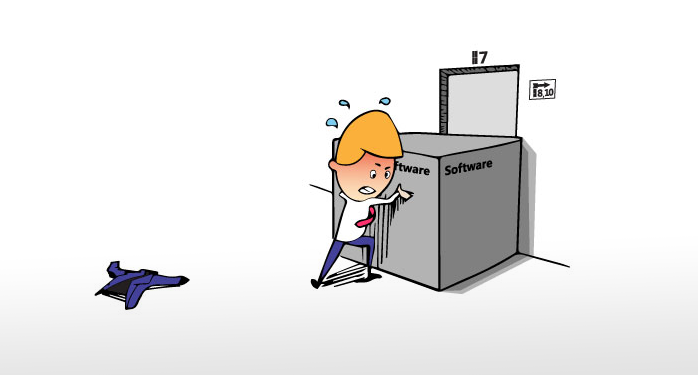
  • Your business can’t use the software it buys…

    Your business can’t use the software it buys…

    Tell me, why are businesses buying software they cannot use ?!?

    Most businesses can’t use the software they buy today straight out of the box, and instead, a time consuming, labour intensive and expensive process is needed in order to safely deploy and update the software.


    But is there any other option available on the market today? In this series of articles, I explore the reasons why the industry is so set in its ways and call for real technological innovation with a charge towards the automation of processes we have seen prove so successful in so many other industries already.


    Why your business can’t use the software it buys…

    You would expect that software can simply be deployed and used by the employees of the company immediately, but ask anyone in IT and they will tell you that this is not possible. The complexity of a large IT ecosystem means that it is simply not safe or good practice for end users to install software themselves.


    Instead, the IT department must manage the deployment, updates and life cycle of all software across hundreds or even thousands of machines. However, in nearly all cases the installer provided by the software vendor is aimed at manual installation and on one machine only.


    For anyone who remembers the stress of installing software on a home PC with screens of dialogues to configure, confusing options and possible compatibility issues, you will realise managing this across a large business network of computers manually is simply not an option.


    What happens today…

    Before software can be used in the business, IT needs to transform the software installer into an automated installer that can be deployed via common IT systems such as SCCM. The installer also needs to comply with specific IT rules for security and maintenance reasons.


    Software can only be made available to the end users after this special process called “Application Packaging”. This isn’t easy, cheap or fast and takes specialist coding skills.

    “Application Packaging” is the process of adding IT rules to desktop software and then automating the installation process so that it can be deployed across multiple computers.

    This should be easy and fast. But it isn’t…


    So why doesn’t the vendor allow me to configure his software?

    Most of us in the IT industry think that it’s really strange that software isn’t properly prepared by vendors allowing IT staff to add their own rules and then download the installer package… after all nearly every other industry has innovated and evolved in this way towards customisation, so why not software?


    IT Managers use “Application Packaging” to manage their end-user software estate, regardless if they install it onto Windows computers or virtualize it on a server by e.g. using Citrix. However Application Packaging requires expert knowledge, is cumbersome, time-consuming and expensive, and it has been like this for over a decade.


    The Application packaging industry applies a captive model throughout and there is no incentive for them to provide any ‘real’ innovation, except for tools that support the traditionally complicated process, from the big players, service providers and tool vendors.


    And we all accept this.


    The little innovation that is happening comes mostly from service providers. But they are with minor exceptions mostly aimed to support existing processes only. My conclusion is that ultimately nothing really changes and that’s not what innovation is all about.


    Application packaging requires someone to code the required business rules into the wrapper that goes around the application. It’s not these rules that are complicated, it’s the coding bit and experience required that is hard. You see this across every industry that requires any form of programming.


    But Application Packaging does not have to be this way. After all, there are many programs with simple customizations and a significant portion of all business software estates could benefit from the automation of the application packaging, to reduce time, costs and the stress and complexity for the IT department.


    The real question is why do we allow vendors to continue providing software in an unsuitable format?